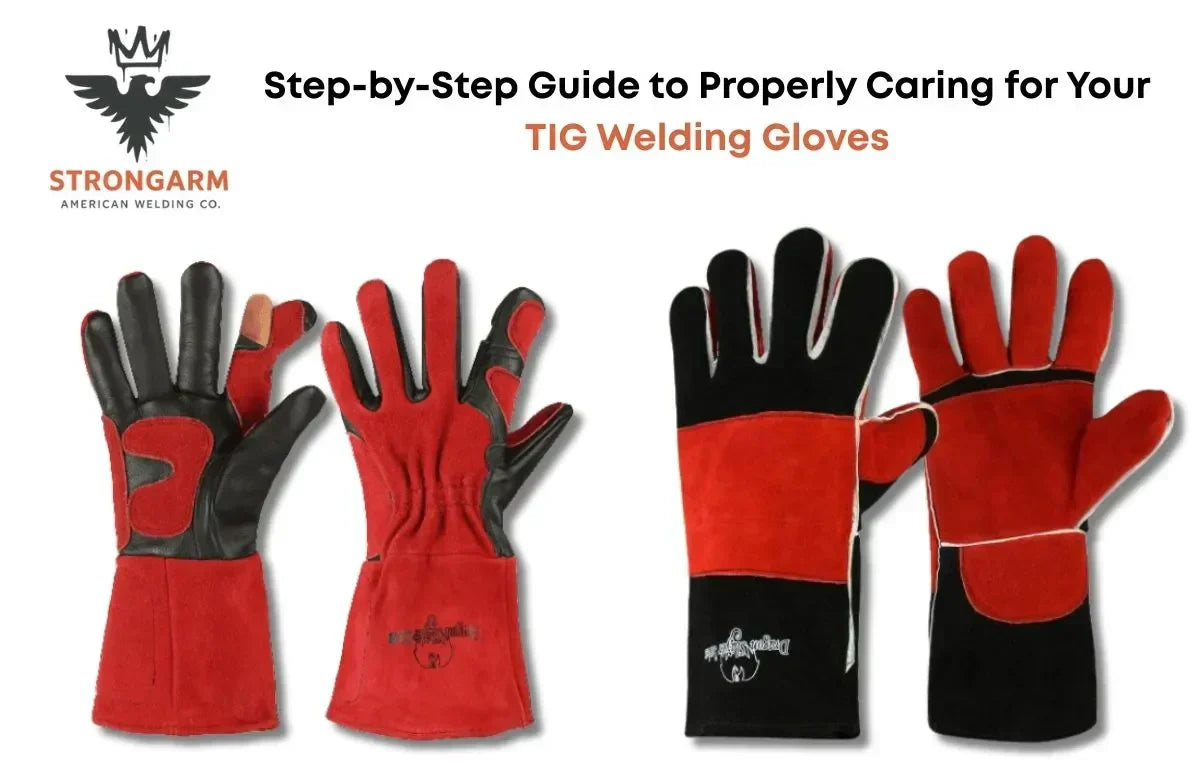
TIG welding demands extreme precision, heat control, and steady hand movement, which is why welders across the USA rely heavily on high-quality TIG Welding Gloves to maintain consistency and safety. Because TIG welding creates intense heat while requiring delicate fingertip control, gloves must stay flexible, clean, and structurally strong. Many welders underestimate how quickly sweat, dust, metal particles, and heat exposure can break down glove fibers if they are not maintained properly. Strongarm Welding continuously educates welders on how proper glove care boosts durability, improves grip, and ensures smooth performance during long work sessions.
Cleaning Your Gloves Without Damaging the Material
- Cleaning welding gloves incorrectly (like using washing machines, strong detergents, or heat dryers) can quickly damage leather and reduce glove life.
- TIG gloves require gentle cleaning methods because their thin material is designed for precision and flexibility.
- Remove dust and debris using a soft brush, and gently wipe surfaces with a damp cloth and cold water if needed.
- Avoid hot water, harsh chemicals, and direct heat, as these can cause shrinking, stiffness, and cracking of the leather.
- Always air-dry gloves naturally in a ventilated area to maintain comfort, flexibility, and safe welding performance.
Conditioning Your Gloves for Maximum Flexibility

TIG welding requires gloves that feel soft and responsive, which is why conditioning is essential for maintaining quality. Leather can harden over time due to heat exposure, sweat absorption, and metal dust settling into the pores. Conditioning restores the natural oils that keep leather smooth and flexible during precise welding movements. Welders in the USA who use premium Leather Welding Gloves often treat conditioning as part of their routine equipment maintenance. A small amount of leather conditioner applied with a soft cloth is enough to restore elasticity without oversaturating the material. Strongarm Welding recommends conditioning after every few weeks of heavy use, ensuring your gloves maintain their shape and don’t become stiff.
Storing Your Gloves Properly Between Jobs
- Proper storage is often overlooked, but it plays a major role in maintaining welding glove durability and performance.
- Leaving gloves in tool bags or near welding machines can expose them to heat, sparks, and humidity, which speeds up damage.
- Gloves should always be stored in a cool, dry place to prevent mold growth, stiffness, and material breakdown.
- Strongarm Welding recommends keeping gloves clean, flat, and away from direct sunlight or hot enclosed spaces.
- Using breathable storage pouches helps maintain airflow, reduce moisture buildup, and ensure gloves stay ready for reliable TIG welding use.
Identifying When It’s Time to Replace Your Gloves
No matter how well you care for your gloves, they will eventually wear out. It’s important to recognize the signs that indicate you need a replacement to maintain safety and welding accuracy. If the leather thins out to the point where heat becomes noticeable or if the stitching begins to loosen, it’s time to replace them. Loss of grip is another warning sign, especially since TIG welding requires steady handling and fine motor control. Many professional welders upgrade to premium options like the best gloves for welders to ensure better safety and longer lifespan. Strongarm Welding encourages welders to inspect gloves daily before starting a project. Using damaged gloves can reduce precision and increase the risk of burns.
When to Replace Your TIG Gloves for Safety
- Even with proper care, all welding gloves eventually wear out and must be replaced to maintain safety and performance.
- Welders should look for warning signs such as thinning leather, weakened seams, or reduced grip strength.
- Loss of heat resistance or tactile sensitivity can make TIG welding more difficult and increase safety risks.
- Strongarm Welding recommends inspecting gloves before every use, as even small damage can become dangerous during high-heat work.
- Timely replacement of worn gloves helps prevent burns, hand fatigue, and inconsistent weld quality while maintaining professional standards.
Choosing High-Quality Gloves for TIG Welding
Caring for your gloves is important, but choosing the right pair from the start makes the process easier and more effective. Premium gloves made from strong, flexible leather offer better resistance to heat and abrasion, making them ideal for long TIG welding sessions. Many welders in the USA prefer Made in USA Leather Gloves because they trust domestic craftsmanship for durability and consistency. Strongarm Welding designs gloves specifically for welders who want reliable comfort, tactile sensitivity, and heat protection. Welders looking for extra safety often pair TIG gloves with additional gear like Cut Resistant Gloves to protect themselves during metal preparation and finishing tasks.
Why Choose Strongarm Welding?
Strongarm Welding stands out because the company focuses on delivering high-quality welding gear built for durability, comfort, and precision. Every product reflects careful craftsmanship, reliable materials, and performance-tested design. Welders across the USA trust Strongarm Welding because the brand consistently delivers protective equipment that supports long hours of work, ensures safety, and enhances control during detailed welding tasks. Whether you are a beginner or a professional fabricator, Strongarm Welding provides dependable gear that keeps your hands protected and helps you work with greater confidence.
Customer Reviews
“Strongarm Welding gave me the most comfortable TIG gloves I’ve ever used. They last long and feel great during precision work.” – Ethan Walker, Texas, USA
“I trust Strongarm Welding because their gloves stay flexible even after months of use. Their quality impressed me from day one.” – Liam Brooks, California, USA
“My welding sessions improved instantly after switching to Strongarm Welding gloves. They offer real control and protection.” – Noah Carter, Ohio, USA
“I appreciate how Strongarm Welding designs gloves that hold up under daily work. They fit well and stay durable.” – Mason Reed, Florida, USA
“Strongarm Welding delivers reliable welding gloves every time. The comfort and grip make a huge difference in my work.” – Lucas Bennett, Pennsylvania, USA
People Also Asked
1. How often should I clean my TIG welding gloves?
Clean them after heavy use or whenever dirt builds up to keep them flexible and safe.
2. Can I wash TIG gloves in a washing machine?
No. Hand-clean them gently to avoid damaging the leather and stitching.
3. How do I keep my gloves soft?
Use a leather conditioner occasionally to prevent stiffness and cracking.
4. When should I replace my welding gloves?
Replace them when the leather thins, the grip weakens, or stitching starts to open.
5. Can heat exposure damage TIG gloves?
Yes. Avoid storing them near heat sources to prevent shrinking and hardening.
Final Thoughts
Proper care of your TIG welding gloves keeps them flexible, safe, and long-lasting. When welders follow the right cleaning, conditioning, and storage steps, they maintain better control and achieve cleaner welds. Strongarm Welding always encourages welders to treat their gloves as essential tools because well-maintained gear improves performance and safety on every job. With the right habits and high-quality gloves, welders can work confidently and efficiently for much longer.
Upgrade Your Precision and Grip with Premium TIG Welding Gloves!
Maintaining ultimate torch control and protecting your hands from intense heat in a busy fabrication shop shouldn't be a struggle. The professional team at Strongarm Welding helps hardworking fabricators, custom builders, and aerospace welders across the USA select the perfect TIG welding gloves every single day, and we are ready to ship yours next.
- Call us directly at 1 678-691-2332 to speak with a specialist who knows industrial safety gear and tactile, high-heat hand protection inside and out.
- Visit our Contact Us Page right now for fast product recommendations, exact sizing charts, and easy bulk ordering support for your whole crew.
Stay connected with Strongarm Welding
Follow our official social media channels to get instant alerts on new protective gear drops, flash sales, and practical workshop lifestyle tips:
Whether you are laying down flawless walk-the-cup beads on a commercial production line or working on intricate stainless steel piping in your home garage, slipping on a premium pair of TIG welding gloves keeps you safe, dexterous, and completely focused on your work.
About the Author
The Strongarm Welding Team is a dedicated group of welding safety professionals focused on designing high-performance protective gear for workers across the USA. With years of industry experience, the team understands the real challenges welders face in precision, heat control, and long working hours.